Prof. Wolffgang at the Zollwärts Congress in Essen: customs in transition
October 22, 2026
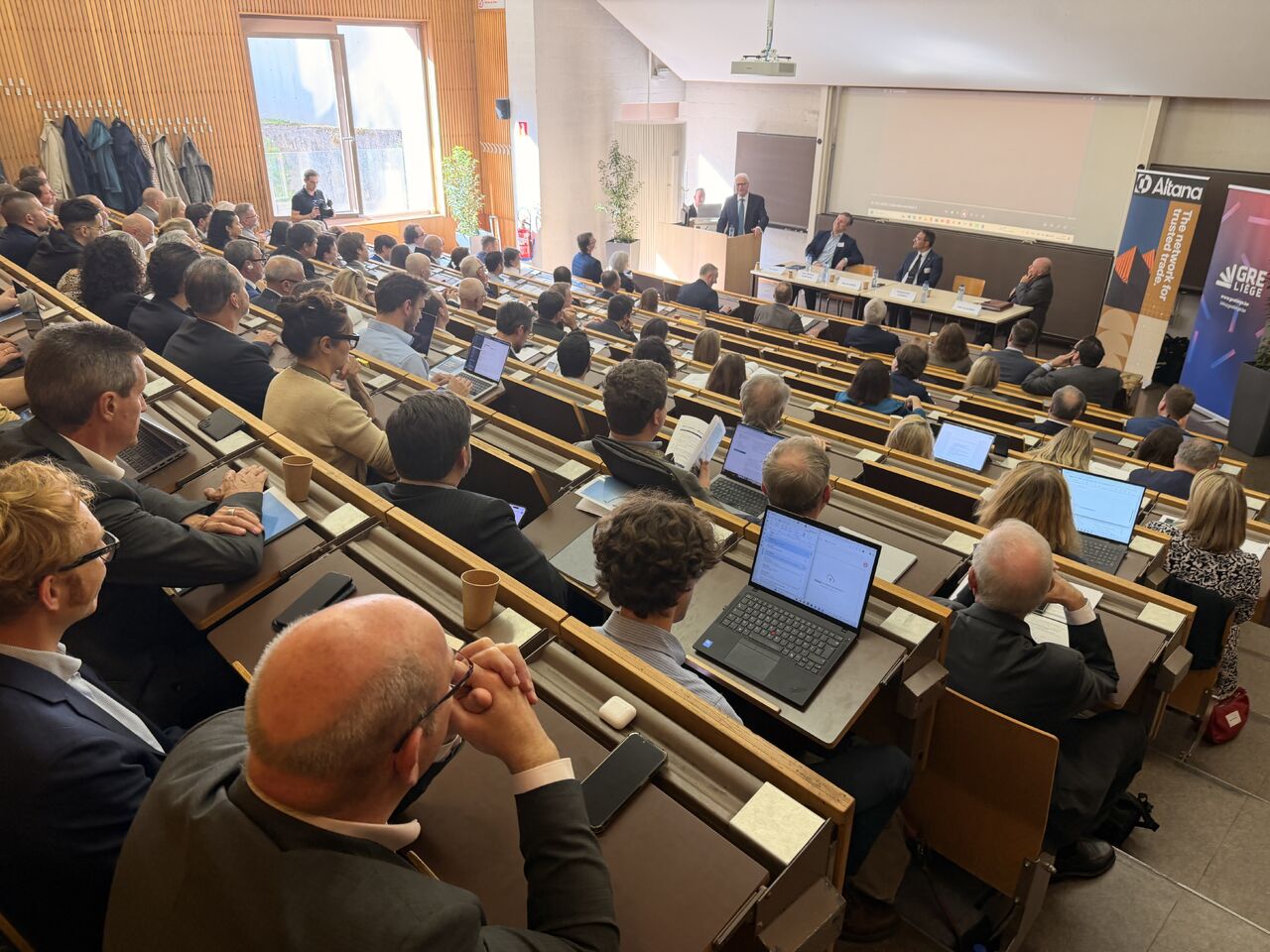
On 24 and 25 September 2026, the Zollwärts Congress for Innovation in Customs and Foreign Trade took place in Essen. The programme included presentations, practical workshops, a barcamp and networking formats. Prof. Hans-Michael Wolffgang took part in the panel discussion “Customs in the Big Shift”, which examined how geopolitics, customs law reform and artificial intelligence are changing customs. The panel linked four decades of customs and trade developments with the demands companies face today.
In the late 1980s, customs clearance was still largely paper-based. With the Customs Code and the Union Customs Code, digital procedures gradually took hold. At the same time, the role of customs widened: alongside the collection of duties, the security function gained weight, particularly after the terrorist attacks in the United States. The trade policy environment has shifted as well. The World Trade Organization was once associated with the hope of greater free trade; today world trade is shaped above all by the United States and China. Companies must keep track of free trade agreements, trade defence measures, investment and export controls and further regulatory requirements at the same time. Uncertainty and complexity are rising accordingly.
The EU customs reform and the Customs Data Hub change above all the form and timing of data provision. The information still required is to be held in a common data space, ideally before the goods arrive. Those responsible for customs therefore need to be involved in internal processes at an earlier stage. Master data, data quality and process reliability must be assured before the declaration is filed, which calls for closer cooperation between purchasing, logistics, customs and other departments.
AI can support customs work in research, in summarising legal sources, in classification, in reading documents and in processing large volumes of information. This requires integration into company systems and a reliable data basis. Customs administrations also use AI to analyse data and detect inconsistencies, so companies should prepare their data consistently before transmitting it. The customs function is moving closer to the interface between clearance, data management, compliance and the supply chain.
Geopolitical change makes long-term dependence on individual suppliers, production sites or sales markets harder to sustain. The strategic measures mentioned were: diversifying supply chains through additional and regional suppliers, reviewing strategic stock levels for critical components, broadening the geographical spread of production and sales markets, and taking customs and trade risks into account in decisions and contracts.
Customs has thus developed into a data- and technology-driven field whose strategic importance continues to grow with geopolitical risks, trade barriers and regulatory requirements. For companies this means involving customs staff in business processes at an early stage, systematically improving master data, data quality and process reliability, using AI in a process-integrated way, broadening supply chains, production sites and sales markets, and giving customs and trade risks greater weight in operational and strategic decisions.
Related Posts